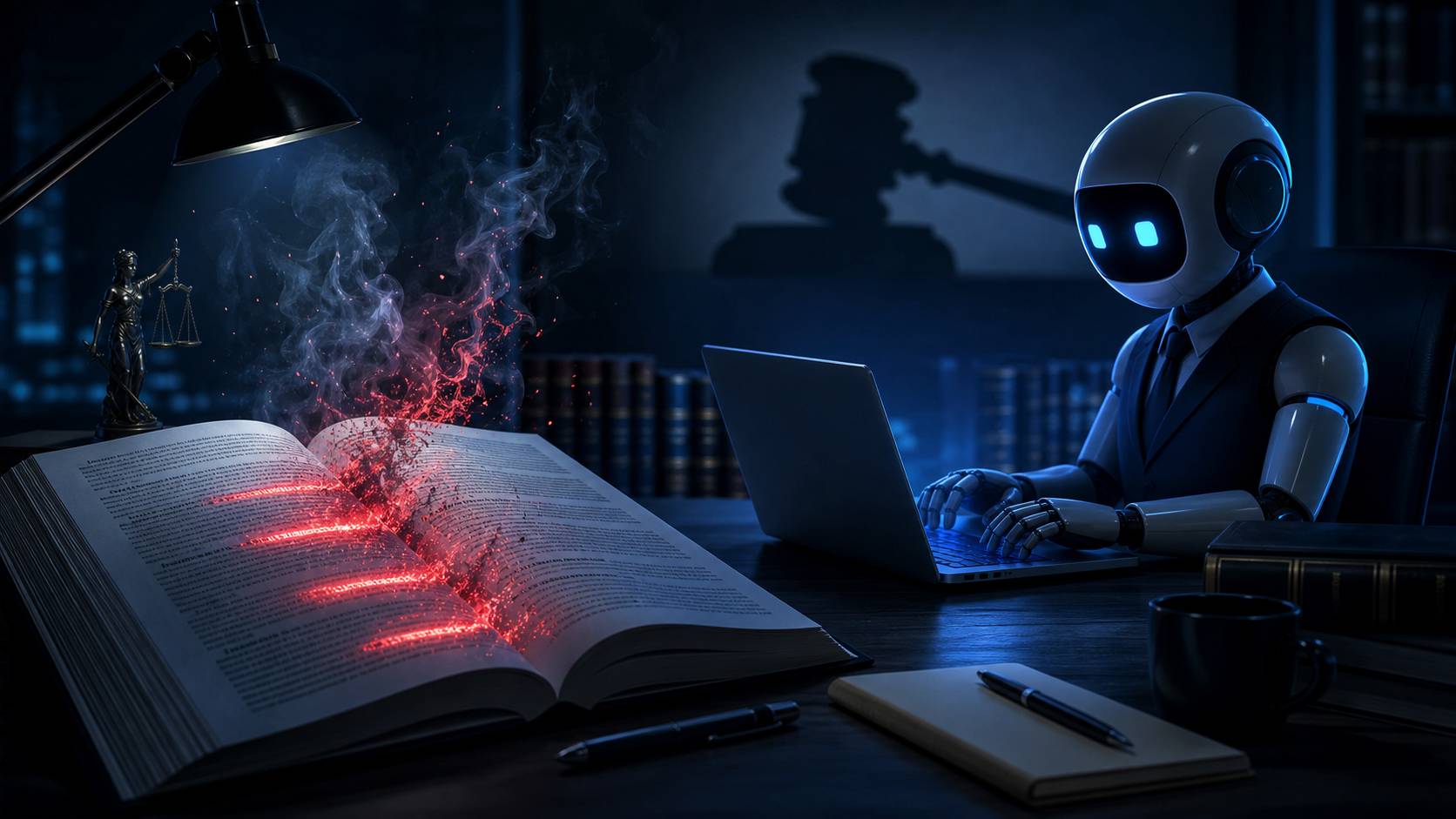
The Hallucination
Two lawyers filed a brief citing six court cases that never existed. They asked ChatGPT if the cases were real. ChatGPT said yes - and invented the excerpts.
25 minutes. A branching story, a source-or-cut lab, and a verification-tier sprint. A safety score that follows you.
Before you start
- One real incident, played as decisions - no slides, no lectures.
- About 25 minutes, one sitting - leave early and you start over.
- You make timed choices; your score changes with your decisions.
- You get a safety score with feedback on every decision - never a leaderboard, never your name.
- Your firm sees completion evidence - never your answers. Teammates never see your score.
- Finish and you get a certificate with a unique ID anyone can verify.
This module is included with team access.
Module 1 stays free. Modules 2-14 open with team access.
See team accessSix cases cited. Zero of them real.
2023. Two attorneys file a brief citing at least six court decisions that never existed - ChatGPT invented them. When the lawyers asked ChatGPT if the cases were real, it said yes and fabricated the excerpts too.
Judge Castel sanctioned them and their firm $5,000, writing that they "abandoned their responsibilities." The primary source - the sanctions order - is in the Case Library.
"The AI wrote it" is not a defense. The company owns what its AI says - Air Canada learned that when its chatbot invented a refund policy and the airline had to honor it.
9:07 PM.
The report is due at 9 AM.
You are Riley, a consultant. Your AI draft of the client report is genuinely good - and it ends with a perfect statistic.
YOUR SCREEN
"67% of mid-size firms reported an AI-related data incident in 2025 (Industry Survey, 2026)." The citation format looks completely legit. The client call is at 9 AM.
The perfect statistic.
Your teammate says: "It's just an internal draft - we'll verify before the final."
Then the draft goes to the client "for early visibility" anyway.
Your company's chatbot told a customer the refund window is 90 days. It's actually 30.
Source it or cut it.
Select every claim that cannot be sourced. Four of these are fabricated with realistic-looking references. Then check your work.
How hard do you verify?
SAFETY
101
This certifies that
has completed Module 3 - The Hallucination: verify before you trust on with a safety score of /100 in of active time.
Safety score - verification: how your decisions held up, graded 0-100.
Objective: Detect fabricated AI content and apply the source-it-or-cut-it rule.
Seat time ~10-25 minutes. Verify this certificate at aisafety101.com/verify.
Evidence on record: decision history, lab accuracy, sprint calls, knowledge check. This certificate ID verifies in your firm's admin report. A team certificate issues when every enrolled employee completes all 14 modules.
Your one rule to keep: anything client-facing, legal, financial, or published gets checked against a primary source - every time. The AI confirming itself is not verification.
Next: The Bias. You just learned to catch a confident, fluent lie. Next: the mistake nobody hears - a model that quietly discriminates at scale, with your name on the decision.